Philippines: Expanding Investment Pathways for Resilient and Affordable Housing

Ariana Karamallis
Director of Global Engagement
The Challenge: A Nation at the Epicenter of Climate Risk
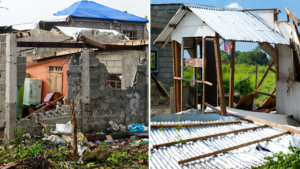
The Philippines ranked first out of 193 countries in the 2025 World Risk Report, highlighting its position as the most disaster-prone country globally. With the frequency and severity of extreme weather events increasing every year due to climate change, this harsh reality makes access to affordable, resilient housing an urgent need for millions – particularly low-income communities who are most vulnerable to climate change impacts.
According to research by Build Change, approximately 50% of all homes in the Philippines require structural improvements to withstand extreme weather. Yet, a massive gap exists in the market: non-mortgage loans for home repairs are incredibly rare. Without access to specialized financing, low-income families are left unable to fund the critical upgrades needed to protect their homes from the next disaster.
Housing as Infrastructure for Justice and Resilience
Globally, inadequate housing is disproportionately inhabited by the poor. It is built informally, often by the residents themselves, on whatever land is available using whatever materials and methods are most affordable. In most cases, this means that the most unsafe homes are located in the most precarious locations, inhabited by the most vulnerable people.
Compounding this risk, climate change impacts are becoming more severe every day. Resilient housing is the best defense against loss of lives and livelihoods resulting from disasters and climate-induced events. Unfortunately, those most in need of resilient housing (and most impacted by the effects of climate change) are the same people least able to access or afford it. They have, incidentally, also contributed the least to climate change to date.
Upgrading housing to be climate-resilient serves as a foundational “multiplier” for social development, transforming a physical structure into a shield for human potential. By incorporating passive cooling, structural reinforcement, and flood-mitigation technologies, resilience upgrades directly reduce the physiological stress of climate impacts and the trauma of displacement. When homes maintain a stable internal environment, the immediate benefits to public health are profound—ranging from reduced respiratory issues due to mold prevention to lower rates of heatstroke. This stability provides a vital platform for education and wellbeing, as children in climate-secure homes experience fewer disruptions to their schooling and benefit from a safe, quiet environment conducive to learning and cognitive development.
Beyond health and safety, the transition to resilient housing is a powerful engine for livelihood security and economic justice. For low-income families, a house is often their most significant financial asset and, frequently, their primary place of business. Protecting this asset from climate-driven destruction prevents the “poverty traps” caused by the repetitive costs of disaster recovery and redirecting household funds toward food, healthcare, education and livelihood investments. Ultimately, climate-resilient housing ensures that the most vulnerable populations can transition from a state of constant crisis management to long-term social and economic mobility.
The Solution: Microfinance Meets Structural Engineering
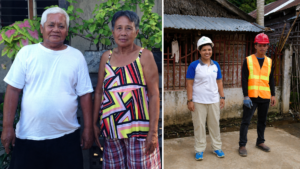
Build Change first began operating in the Philippines in 2013 in the wake of the devastating Typhoon Yolanda. Since then, the organization has shifted from pure post-disaster response to proactive, preventative resilience.
To solve the financing bottleneck for informal home upgrades, Build Change partnered with local microfinance institutions (MFIs) already serving 11 million clients across the country. Together, they developed an innovative, no-collateral financial product tailored specifically for incremental housing repairs.
How the Model Works:
- Accessible Micro-Loans: Homeowners can take out small, manageable loans to complete repairs in phases, borrowing and repaying as their budget allows.
- Technical Assistance: Every loan is paired with engineering support. Build Change ensures that home improvements include the structural reinforcement required to withstand earthquakes, typhoons, heavy rains and wind.
- Community Advocacy: The program fosters local ownership by involving homeowners directly in the construction process and advocating for wider disaster-resilient building standards.
Impact by the Numbers (2013–Present)
Build Change’s long-term commitment to the Philippines has yielded life-changing results:
- 6,349 safer buildings provided.
- 55,555 people living with increased safety.
- 11,139 jobs created within the local construction economy.
- 35,455 people trained in resilient building techniques.
- 21 local organizations that have adopted safer ways of working.
The Pilot: Proof of Concept
In 2019, Build Change put this model to the test with a pilot project that retrofitted 19 homes, protecting USD 190,000 in local assets. The pilot utilized a homeowner-driven reconstruction model, letting families prioritize their specific needs while ensuring the core structure was disaster-proofed.
Quality of life improvements were also made, including the addition of rooms for improved comfort and privacy. This made it possible to avoid relocation and allowed the community to remain within the existing social fabric, with easy access to public transport, school, and employment. Structural retrofit also improved resource efficiency, saving 60 percent of the emissions of equivalent new construction and saving, on average, 77% of the cost.
The Benefits of Retrofitting vs. New Construction |
|
|
|
Looking Ahead: A Scalable Future
In 2025, Build Change introduced Tara, a generative AI assistant designed to support homeowners and local builders in constructing safer homes and strengthening existing housing. The tool was piloted in the Philippines in partnership with microfinance institution KCoop, demonstrating how digital innovation can expand access to practical, real-time technical guidance for resilient construction. Building on these initial results, we are further enhancing Tara’s functionality this year to improve usability, expand its knowledge base, and increase its impact.
This project has demonstrated that Build Change’s homeowner-driven approach combined with financial services from partner institutions is a feasible and scalable solution. By standardizing the previously informal process of determining repayment periods for various home improvements, the new financial product allowed microfinance institutions to replicate this approach with additional clients. This has not only made home improvements more affordable and sustainable but also contributed to building resilience in vulnerable communities across the Philippines.
As this model continues to scale, it offers a blueprint for how climate-vulnerable nations can unlock private capital to build grassroots resilience, one home at a time.
From the Ground: Oliver’s Story
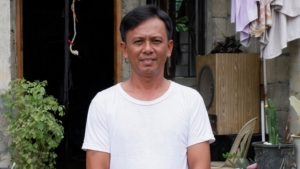
“I joined the program in November 2020. I had my posts and ring beams fixed. When Typhoon Noru hit, the wind was strong but since we had our house strengthened we did not feel anything… Before, whenever there’s a storm signal in our community we are forced to evacuate, but after I strengthened our house, we no longer need to. I can really recommend this program to everyone, especially those who don’t have enough money to have their houses built and strengthened in one go.”
– Oliver Garcia, Homeowner, Philippines
Learn More
To see this impact in action and read the data behind the strategy, check out these resources:
Support resilient housing worldwide
Join us in preventing housing loss caused by disasters.
Donate nowNewsletter
Sign up for our newsletter to receive updates on our latest news, events, and more.