The Next Earthquake Does not Have to Be a Disaster: Building Resilience in Mindanao

Liva Shrestha
Director of Programs and Engineering lead APAC
Building Back Better in Mindanao: Leveraging Proven Expertise for Resilient Housing and Schools
In the aftermath of the magnitude 7.8 earthquake that struck Mindanao on 8 June 2026, communities across the region are grappling with widespread damage and displacement. According to DSWD DROMIC Report No. 14, approximately 58,576 houses were damaged. In addition, UN OCHA Situation Update No. 2 reports that the Department of Education (DepEd) recorded damage to 6,224 schools across five regions, disrupting the education of more than 3.2 million learners and affecting over 128,000 teachers and school personnel.
Much of this damage was preventable. Experience from earthquake-affected countries shows that buildings often fail because they were not designed or constructed to withstand it. Build Change estimates that up to 75 percent of damaged houses in Mindanao can be repaired and strengthened, enabling families to return home safely while reducing future risk.
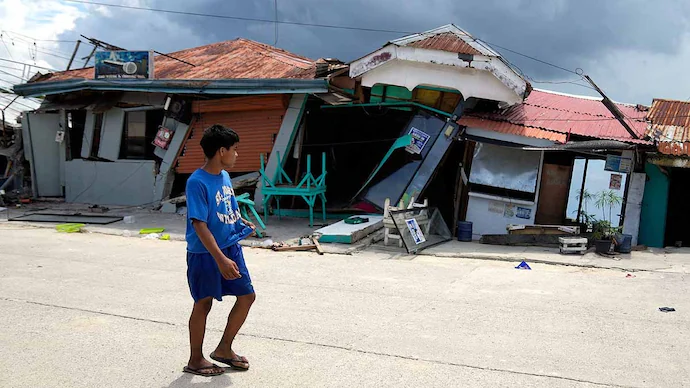
The house shown above illustrates a common vulnerability. To accommodate storefronts, homeowners often reduce wall area at the ground floor, weakening the building’s ability to resist earthquake forces. Combined with the absence of a continuous ring beam, this can lead to collapse. In this case, the combination of inadequate wall area and the absence of a continuous ring beam seems to have led to the collapse. Simple and affordable improvements could have prevented this damage.
Across the Philippines, many low-income households rely on the informal construction sector, where builders often lack technical training, and engineering support. As a result, homes are frequently constructed without critical structural elements needed to resist earthquakes and typhoons.
Build Change has been working in the Philippines for several years to strengthen housing resilience before disasters strike. Through partnerships with microfinance institutions (MFIs), we enable low- and middle-income homeowners access financing and technical assistance to build safer homes and strengthen existing ones. Our incremental strengthening approach enables families to improve their homes in affordable stages, making safer houses accessible to those with limited resources.
The same challenges are evident in schools.
 |
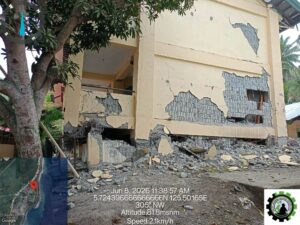 |
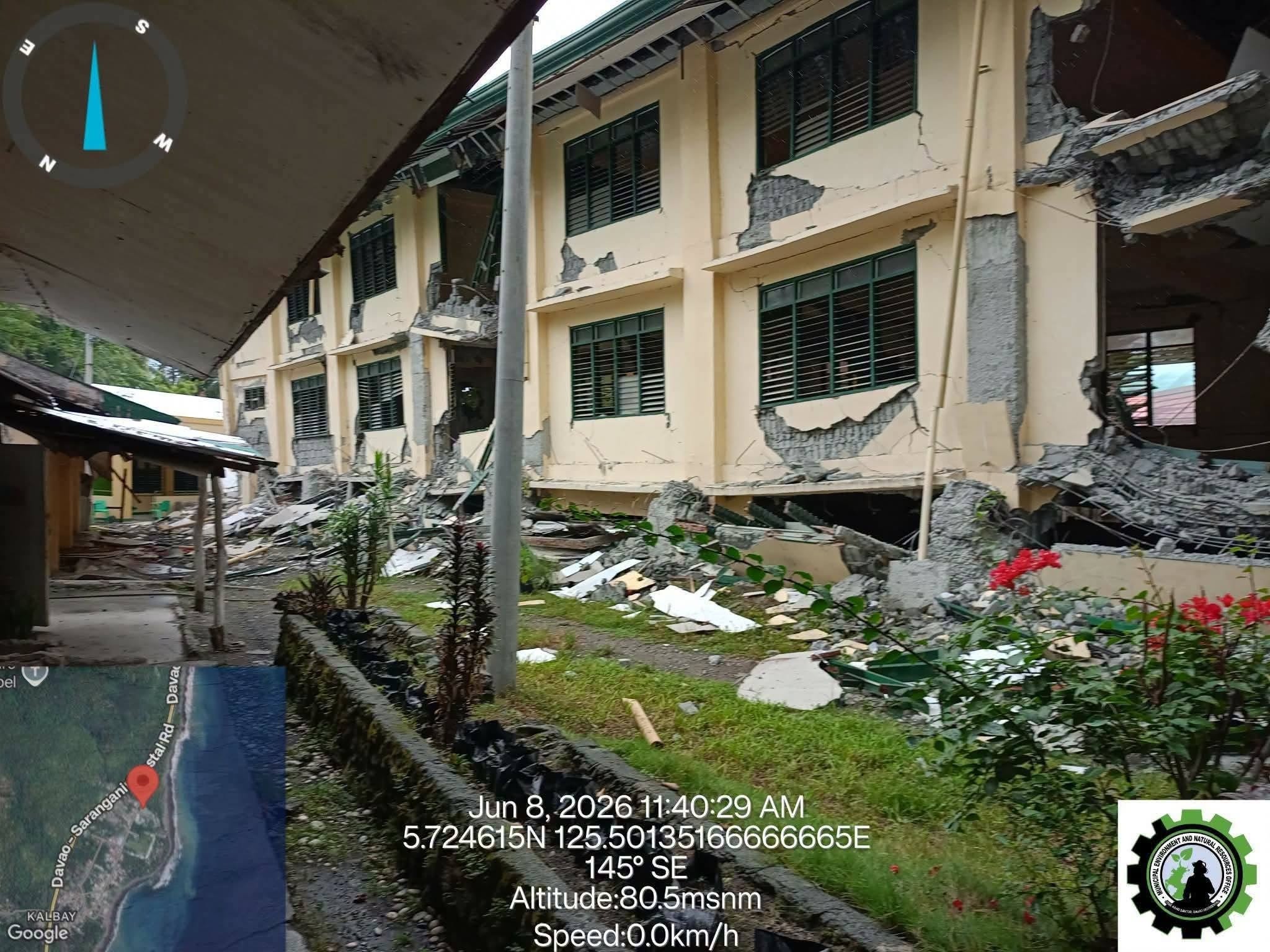
A School building in Davao Occidental, damaged by the earthquake.(Photo Courtessey: Municipal Environment and Natural Resources Office, Negros Oriental Philippines’s Post)
The school building shown above suffered severe structural damage during the earthquake. Many such failures occur because of “weak” ground floors with too many openings, insufficient column capacity, poor construction quality and inadequate steel reinforcement.. Yet these failures are largely preventable through good engineering design, quality construction and proper oversight.
Build Change has extensive experience supporting post disaster recovery in countries such as Nepal and Turkiye where Build Change has supported the reconstruction of more than 32,000 homes and trained over 4,000 engineers and construction professionals post disaster.
As Mindanao begins the recovery process, there is an opportunity to move beyond replacing damaged buildings and instead invest in safer homes, stronger schools, and more resilient communities. Build Change stands ready to support national and local partners in achieving that vision.
Support resilient housing worldwide
Join us in preventing housing loss caused by disasters.
Donate nowNewsletter
Sign up for our newsletter to receive updates on our latest news, events, and more.