Program Update: Climate-Resilient Housing for Low-Income Women in Indonesia

Ariana Karamallis
Director of Global Engagement
The Challenge
Low-income families in Indonesia— especially women living on less than $5 per day—are on the frontlines of climate change. Extreme heat threatens their health and productivity, yet they lack the capital and expertise to adapt their homes.
Heat, Housing & Health
WHO research shows that informal housing often traps heat instead of providing shelter. Due to poor insulation and materials like galvanized steel, indoor temperatures can soar 4–5°C higher than outdoors. This lack of “thermal comfort” leads to heat exhaustion, kidney stress, and severe respiratory or cardiovascular complications.
Heat Threatens Livelihoods
Chronic heat actively drains a family’s long- term potential:
- Stalled Education: Global research links rising temperatures to significant learning loss. Without a cool place to sleep or study, children in these homes face severe cognitive deficits.
- Eroded Incomes: For women running home-based micro-enterprises, heatwaves are economic crises. Extreme heat can slash daily earnings by up to 40% due to physical exhaustion and sleep deprivation.
The Solution
With institutional support from the Global Innovation Fund and follow-on funding from the ClimateWorks Foundation, we partnered with KOMIDA, a leading Indonesian microfinance institution (MFI), to pioneer a scalable model for heat adaptation. The initiative drives impact through three pillars:
- Innovative Financing: We developed an Incremental Climate Adaptation Loan (ICAL) that allows low-income women to invest in critical home upgrades to improve climate resilience, health and wellbeing.
- Tech-Driven Scale: We are training KOMIDA loan officers to use BCtap, a digital technical assistance platform that streamlines the assessment, planning, and implementation of climate-resilient construction.
- Low-Cost, High-Impact Interventions: We design and refine a menu of affordable solutions (averaging $150–$600 per home)— including reflective roof coatings, insulation, and enhanced ventilation— specifically engineered to reduce indoor temperatures.
Impact and Findings
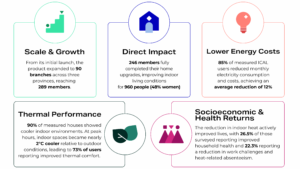
Launched in May 2025, the ICAL loan product has proved the viability of climate resilience financing for low-income women. The impact of the project’s first phase includes:
Moving Beyond Pilot
In the next phase of the program, funded by ClimateWorks, Build Change will scale up ICAL intervention packages for extreme heat adaptation for at least 1,000 beneficiaries in 150 branches, expanding up to 3-story houses, with the aim of generating a sustainable ICAL business product line by KOMIDA.
Together, we can turn disaster into resilience. Partner with us.
If you’d like to support Build Change’s work in Indonesia, contact us at
Support resilient housing worldwide
Join us in preventing housing loss caused by disasters.
Donate nowNewsletter
Sign up for our newsletter to receive updates on our latest news, events, and more.